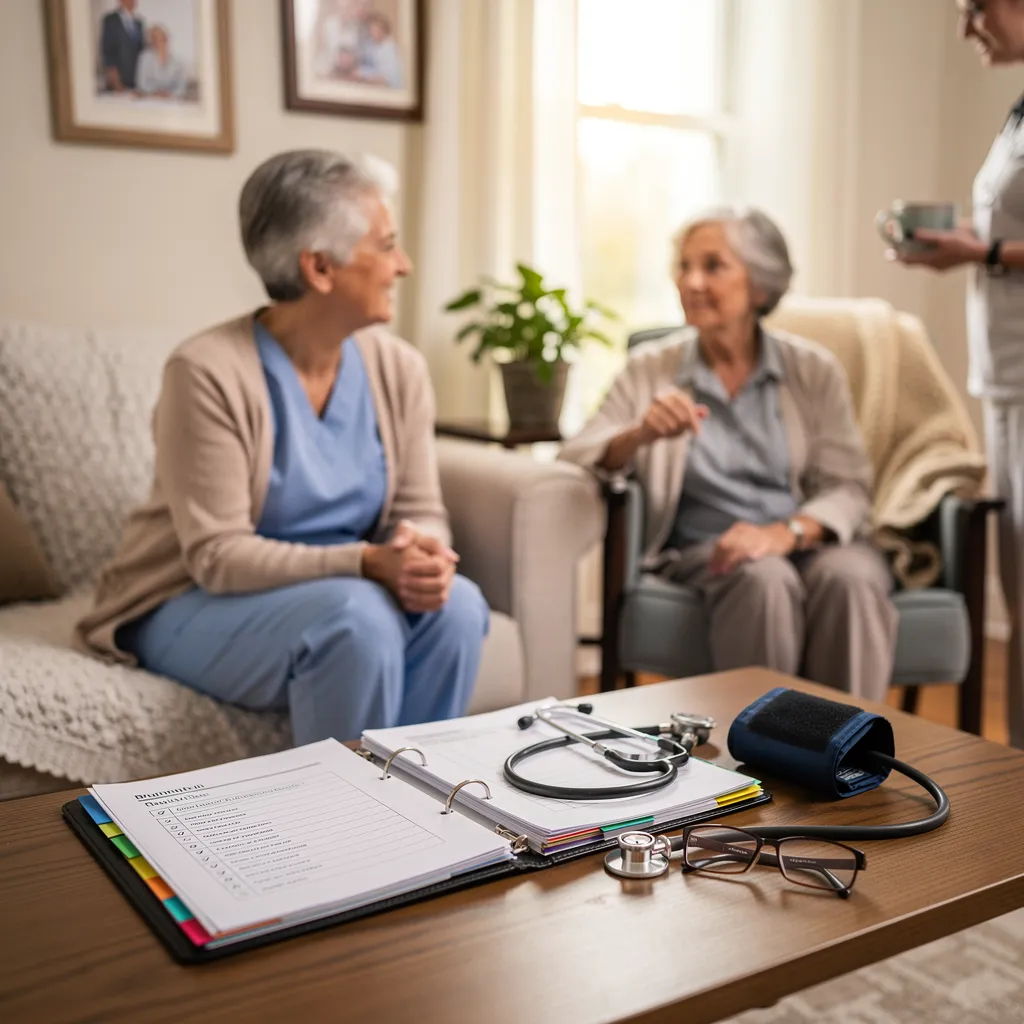
Personalized care plans start with a free in-home assessment that evaluates physical, medical, and emotional needs, answering the question How Does 1Mission Home Care Create Personalized Care Plans for Each Client? Registered nurses supervise 100% THHS certified caregivers who design one-on-one care spanning companion support to specialized Alzheimer’s care, adjusting each plan as a senior’s condition changes to preserve dignity and independence at home.
What Happens During the Free In-Home Assessment?
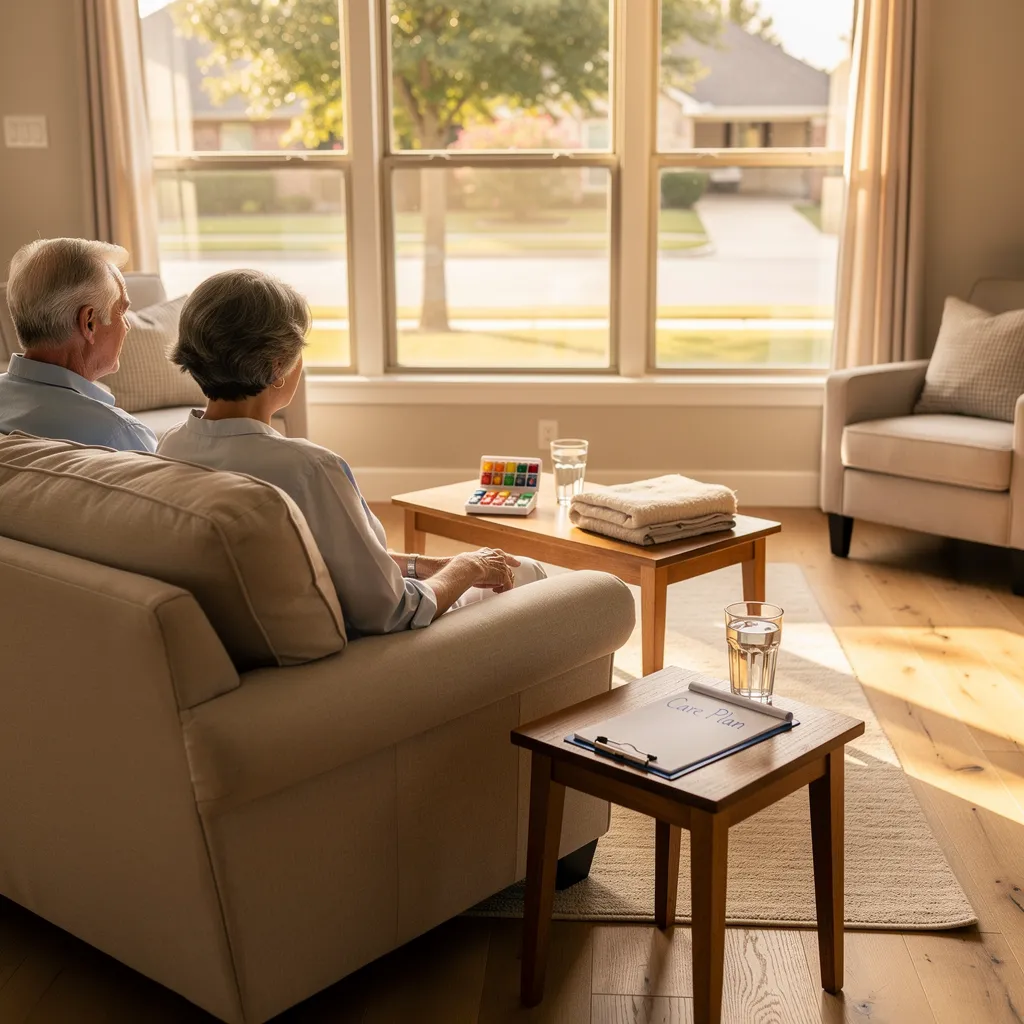
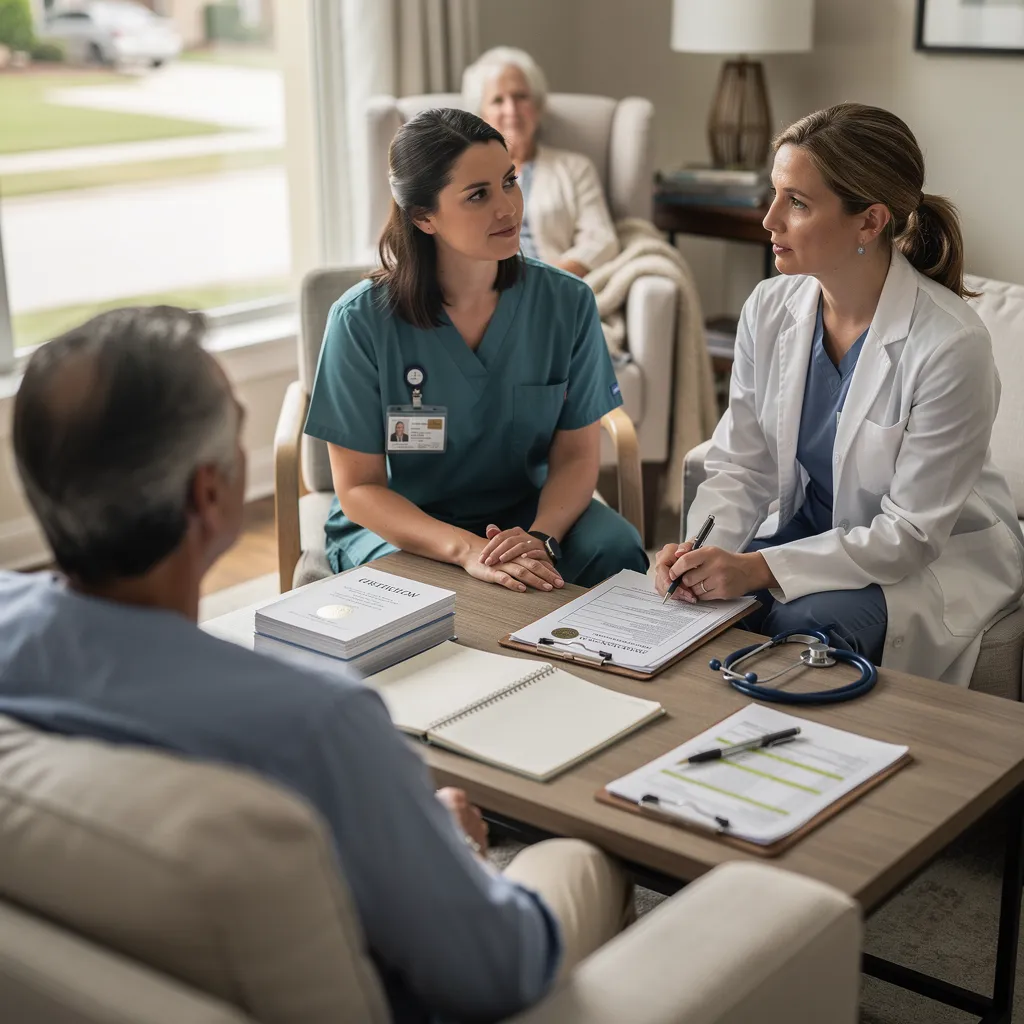
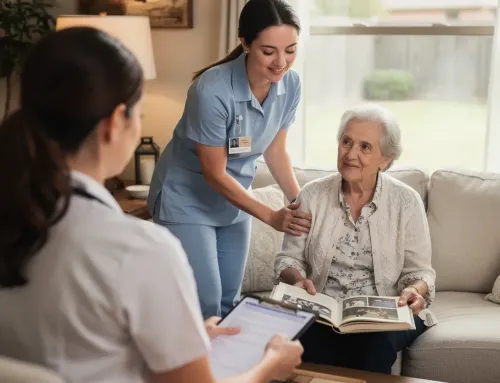
A free in-home assessment kicks off every relationship with 1Mission Home Care. Trained staff visit the family’s home to identify a senior’s specific needs, from daily routines to safety concerns. No cost, no obligation — just a clear look at what daily life actually requires.
The visit builds a real picture of how a senior’s day unfolds. Mornings, medications, meals, mobility around the house — each detail matters. Assessors note where risks live, whether that means a slippery bathroom floor or a memory lapse during cooking. They also ask what happens when family members alone can’t keep up with growing demands.
What information does the assessment gather?
Caregivers and coordinators typically cover several areas during the visit:
- Daily schedule and routines, including sleep and meal patterns
- Mobility, fall risk, and safety hazards throughout the home
- Cognitive status and any memory-related concerns
- Family involvement and current gaps in coverage
- Medical history and specific health conditions requiring attention
How does the assessment turn into a care plan?
Findings from the visit shape a personalized care plan built around the individual, not a generic template. The plan then gets matched with a caregiver suited to the client’s personality and needs. What the agency calls finding “the perfect caregiver.”
Families across McKinney, Plano, and the surrounding Texas communities rely on this locally owned, locally operated process to feel confident from day one. cite-1 The assessment isn’t paperwork for its own sake. It’s the foundation that determines whether care actually fits the person receiving it.

Who Delivers the Care Behind the Plan?
Caregivers on staff carry THHS certification, a Texas Health and Human Services credential that every team member holds without exception. That 100% certification standard sets a consistent baseline before any personalized care plan reaches a family’s front door. Certification alone doesn’t guarantee quality, though — oversight matters just as much.
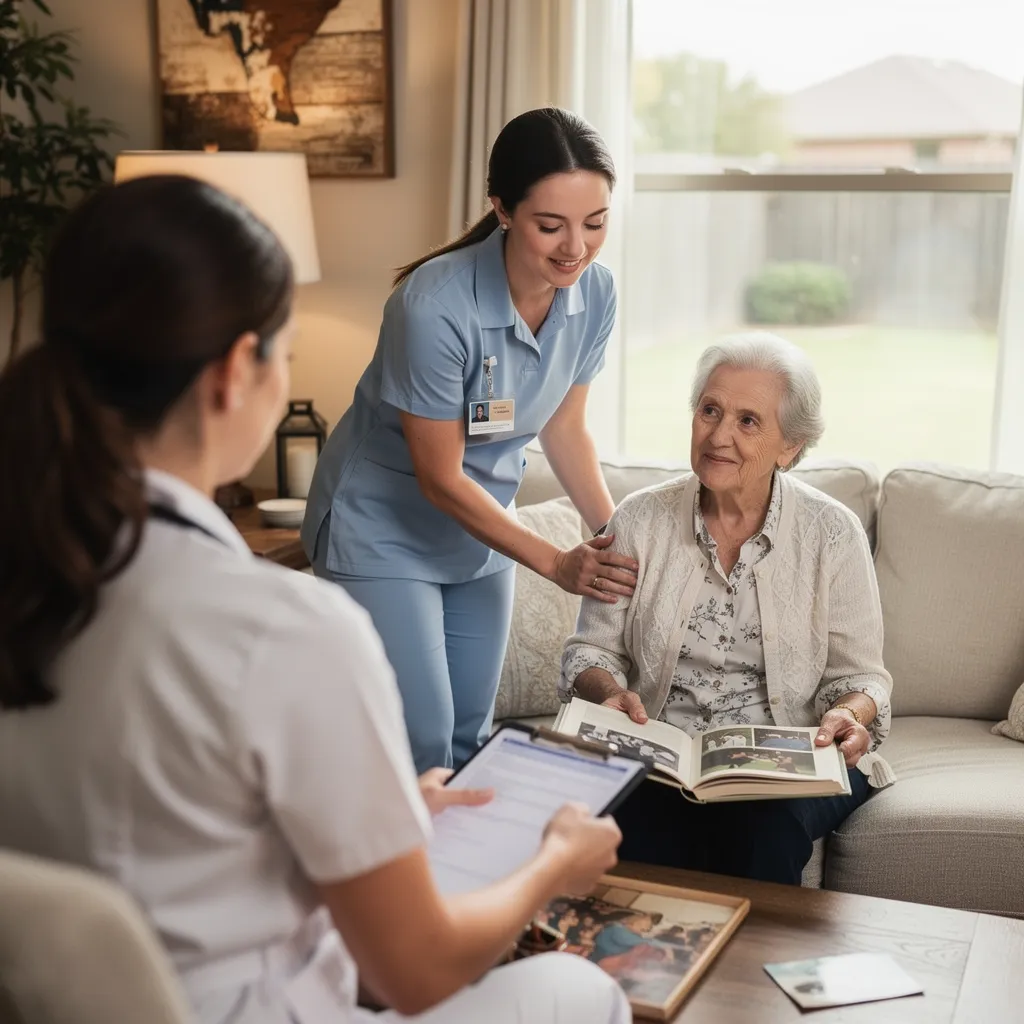
Registered nurses supervise every caregiver assignment, guiding how each plan gets carried out day to day. This nursing supervision adds a clinical layer above hands-on caregiving. Families aren’t relying solely on a single caregiver’s judgment for medication reminders, mobility support, or changes in condition.
Is the Agency Locally Owned?
Ownership and operations stay local, not run through a distant corporate office. Local ownership means decisions about staffing, scheduling, and family communication happen close to the community being served, rather than filtered through layers of national management.
What Values Shape the Caregiving Approach?
Care philosophy centers on family, not just task completion. Every senior, according to the agency’s founding belief, deserves the kind of attentive, compassionate care that comes from family — not a transactional service relationship.
That belief shows up in how the team is structured:
| Element | What It Means for Families |
|---|---|
| THHS-certified caregivers | Every caregiver meets the same certification standard |
| RN supervision | Clinical oversight guides day-to-day care decisions |
| Local ownership | Operations and staffing stay rooted in the community |
| Family-first philosophy | Care is delivered with the warmth of family, not routine |
Adult children comparing agencies gain a clearer picture from this structure: certification sets the floor, nursing oversight raises the standard, and local, family-minded ownership shapes how caregivers show up for aging parents each day.
How Does Care Adjust as Needs Change?
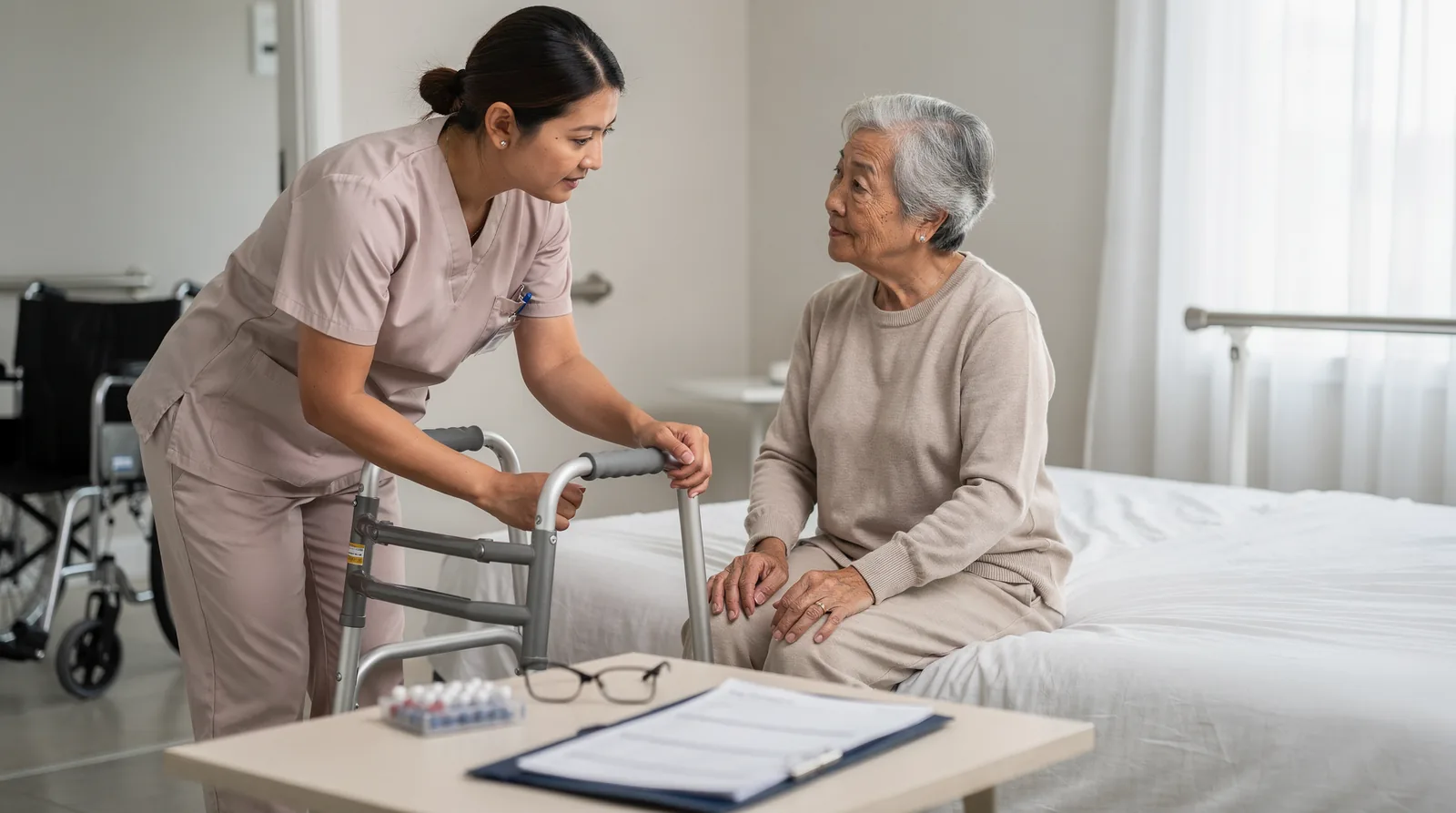
Care plans at 1Mission Home Care shift the moment a senior’s condition or daily routine changes. Adjustments follow a full continuum of care, spanning companion visits through Alzheimer’s support, so a family never has to switch agencies as needs grow more complex. That continuum exists for a specific reason: 1Mission Home Care was founded to help every senior stay home for as long as possible, and staying home often means the care itself has to evolve.
A well-built plan spells out the exact moments it needs to change, particularly the point where family support alone stops being enough. Common shift triggers include:
- A fall, hospitalization, or new diagnosis
- Increased confusion, memory loss, or wandering
- Caregiver burnout among family members handling most duties
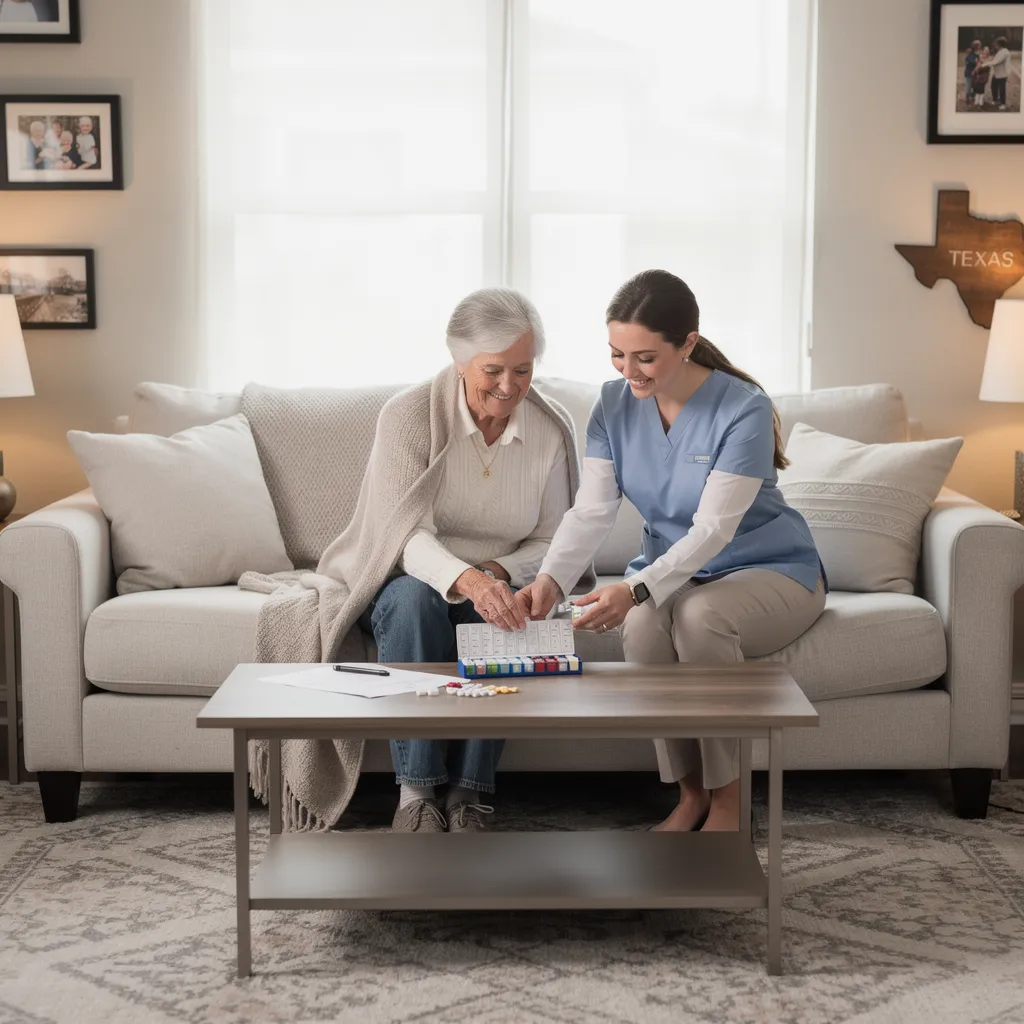
- Medication management becoming too complex for informal help
What happens when a parent’s condition suddenly declines?
Families facing a sudden change can request the free in-home assessment again as a fresh starting point. cite-1 The reassessment identifies new risks and adjusts the plan’s scope, whether that means adding hours, introducing specialized dementia support, or shifting from companion-level help to more hands-on personal care.
Does the care team wait for a crisis before adjusting the plan?
No. Ongoing plans build in checkpoints so changes happen before small issues become emergencies. Catching a decline early, rather than reacting after a fall or hospital stay, keeps the transition smoother for both the senior and the family managing the decision.
Every adjustment traces back to the same goal: keeping seniors safely at home, with care that grows alongside their needs instead of forcing a move families never wanted to make.

What Range of Services Can Be Included?
Service options at 1Mission Home Care stretch across a full continuum of care, starting with companion visits and extending to specialized memory support. Families choosing this agency select from companion care, personal care, respite relief, transitional support after a hospital stay, and dedicated Alzheimer’s care for progressive memory conditions. No single package fits every household, so the mix of services depends entirely on what the aging parent actually needs day to day.
That range matters because a personalized care plan targets specific medical, emotional, and daily living needs rather than applying a generic task list. A parent managing early-stage dementia requires a different combination of services than one recovering from surgery or simply needing help with errands and meals.
What Does “One-on-One Care” Actually Mean?
One-on-one care means a caregiver focuses on a single client during each visit, not several residents at once. This model differs from shift-style attention common in larger facilities, where staff split time across many people. Families get more consistent monitoring and a caregiver who learns the client’s routines, preferences, and warning signs over time.
How Do Families Decide Which Services They Need?
The starting point is always the free in-home assessment. That visit identifies the specific needs of the family member before any services get selected.
Typical service combinations include:
- Companion care for socialization and light household support
- Personal care for bathing, dressing, and mobility assistance
- Respite care giving family caregivers scheduled breaks
- Transitional care following hospital discharge
- Alzheimer’s and dementia-specific care for memory-related safety needs
Plans often blend two or more of these categories as a parent’s condition changes.
Why Choose Personalized Care Over One-Size-Fits-All?
Generic care schedules ignore the fact that no two aging parents follow the same routine, risk profile, or emotional needs. Nearly 90% of seniors express a strong desire to age in place rather than move into a facility, a preference that standardized care packages rarely respect. Families researching options for a loved one quickly discover that a rigid, hourly checklist cannot account for shifting mobility, medication changes, or a parent’s need for connection over tasks. Creating personalized care plans for each client starts from a different premise: care should adapt to the person, not the other way around.
Customized planning is not an upgrade tier or a marketing feature. It functions as the mechanism that determines whether a senior receives the right level of support for conditions that change month to month. Plans built around one individual’s routine catch risks that a generic task list would miss entirely, from fall hazards in a specific hallway to medication timing tied to a particular appetite pattern.
Is Personalized Home Care Worth the Extra Planning?
Yes, because dignity and independence depend on fit, not volume of hours. Personalized care is treated as essential rather than optional. It directly supports a senior’s ability to maintain autonomy and self-respect at home. Families comparing agencies should ask how a provider builds that individual fit before signing anything.
| Approach | What It Delivers |
|---|---|
| One-size-fits-all | Fixed task list, same schedule regardless of changing needs |
| Personalized plan | Adjusts to mobility, memory, and emotional needs over time |
That family-first philosophy reflects a simple belief: seniors deserve the kind of compassionate care that comes from family, and that standard guides how every plan gets shaped from day one. cite-1
At 1 Mission Home Care, personalized care planning reflects our core mission: enabling seniors to thrive in the homes they love. By combining thorough in-home assessments with our team’s compassionate expertise, we craft care solutions that honor each individual’s unique needs and preferences. This thoughtful approach—rooted in family values and delivered by our certified caregivers under nursing supervision—transforms how seniors experience aging at home, ensuring dignity, independence, and genuine quality of life remain within reach.
Frequently Asked Questions
How does 1Mission Home Care create a personalized care plan?
Every plan starts with a free, no-obligation in-home assessment where trained staff evaluate a senior’s daily routine, mobility, cognitive status, and medical needs. Findings from that visit shape a care plan built around the individual, and the family is then matched with a caregiver suited to their loved one’s personality and needs.
Who oversees the caregivers carrying out the plan?
Registered nurses supervise every caregiver assignment, and 100% of caregivers hold THHS (Texas Health and Human Services) certification. That combination of clinical oversight and consistent certification gives families more than a single caregiver’s judgment behind day-to-day decisions.
What happens if my parent’s needs change after the plan is set?
Care plans are built to adjust as a senior’s condition evolves. Families can request a fresh in-home assessment at any point, and the plan can expand along a full continuum of care, from companion visits to specialized Alzheimer’s support, without needing to switch agencies.
What types of services can be included in a personalized plan?
Plans can combine companion care, personal care, respite care for family caregivers, transitional support after a hospital stay, and Alzheimer’s or dementia-specific care. The exact mix depends on the needs identified during the initial assessment.
Is 1Mission Home Care locally owned?
Yes. Ownership and operations are local rather than run through a distant corporate office, so decisions about staffing, scheduling, and family communication happen close to the McKinney, Plano, and surrounding Texas communities the agency serves.
Conclusion
Personalized care planning is what turns home care from a generic checklist into support that actually fits a senior’s life. It starts with a free in-home assessment, is carried out by THHS-certified caregivers under registered nurse supervision, and keeps adapting as a parent’s needs change, whether that means adding a few hours of companion support or moving toward specialized Alzheimer’s care. For families in McKinney, Plano, and the surrounding Texas communities, that combination of local ownership, clinical oversight, and a family-first philosophy is what makes it possible for a senior to stay safely and comfortably at home.


 Copyright © All rights reserved