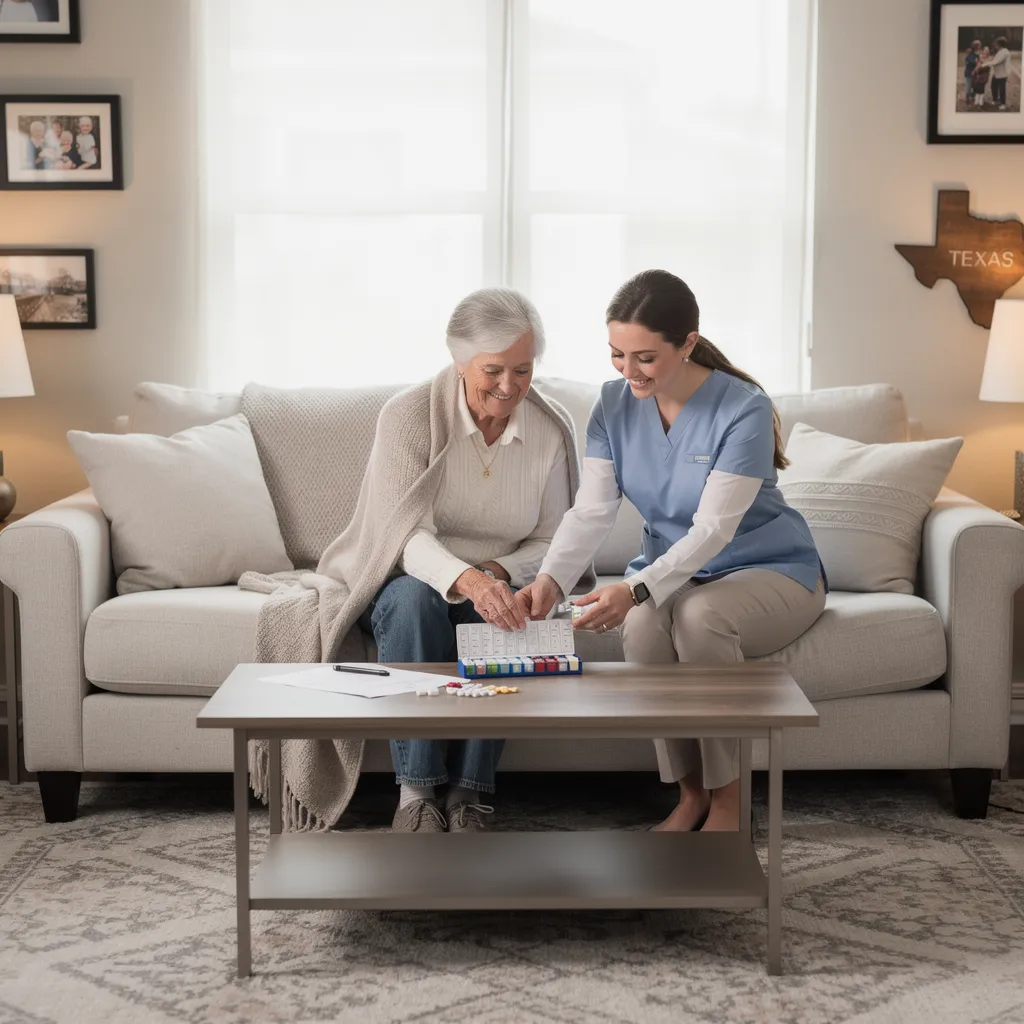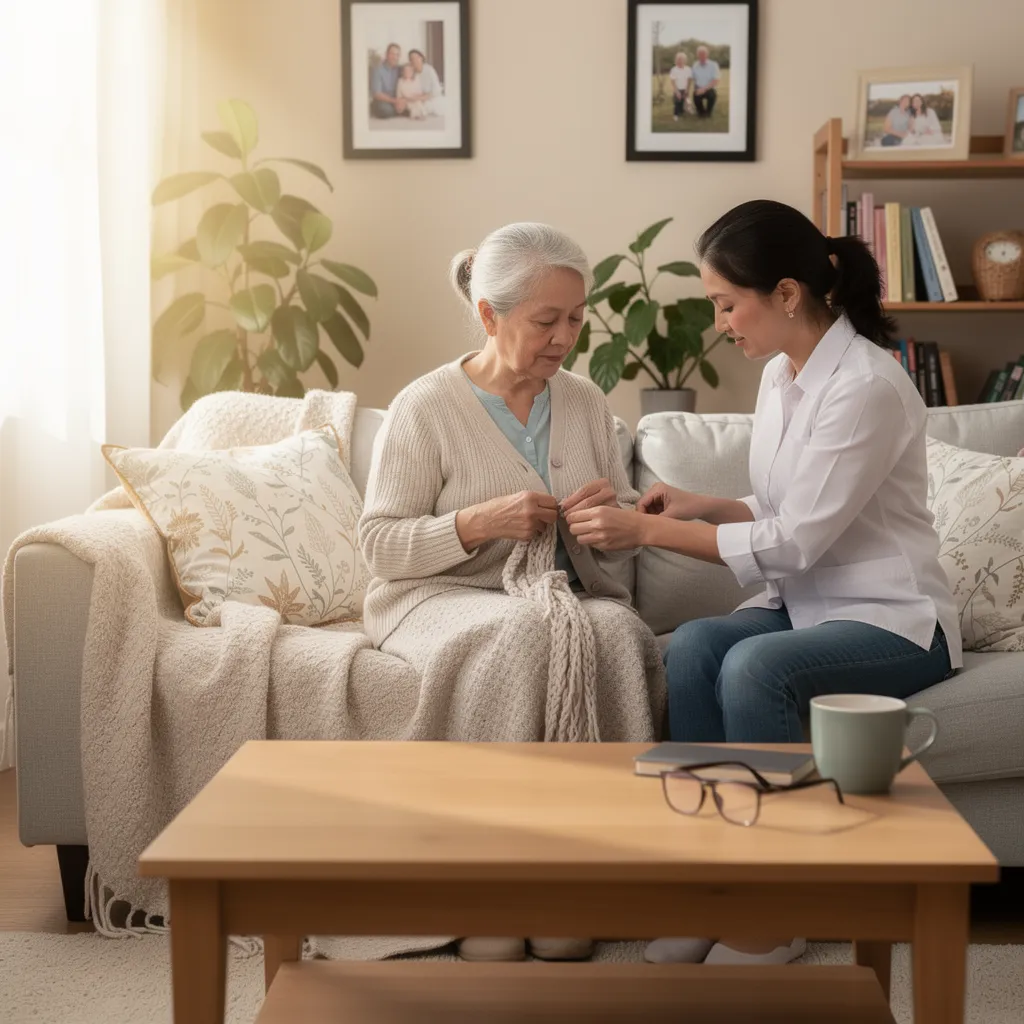

When it comes to How Can I Assess the Quality of Caregivers Provided by Your Agency?, caregiver quality depends on certification, supervision, and consistent training. 1 Mission Home Care staffs 100% THHS certified caregivers, all supervised by registered nurses, serving McKinney and Plano, Texas families. Families should verify credentials, ask about nurse oversight, and review how care plans adapt through a free in-home assessment before selecting an agency.
What Happens When Caregiver Quality Falls Short?
Substandard caregiving adds new stress to families already stretched thin. Physical exhaustion and emotional strain intensify when the paid help meant to ease the load instead creates more work. High-quality home care aims to lighten that burden. When it falls short, families may lose the relief they expected, not just a service they were paying for.
Nationally, 59 million family caregivers assist adults with limitations in daily activities, according to the AARP. Many are already searching for professional support to close the gaps in daily care. When an agency delivers inconsistent or poorly trained caregivers, families searching for relief in assessing caregiver quality often feel overwhelmed and frustrated: managing schedules, correcting mistakes, and worrying about safety.
What are the warning signs of low-quality home care?
Frequent staff turnover, missed visits, and vague communication about a loved one’s condition all signal trouble. Families should also watch for caregivers who seem unfamiliar with basic care routines or hesitant to answer direct questions.
1 Mission Home Care was built to prevent these gaps. The agency was founded so seniors can remain in their own homes for as long as possible, backed by a supportive, respectful environment for clients and staff alike.
Why does this matter for families in McKinney?
Local families need dependable partners, not transactional service providers. 1 Mission Home Care treats every client relationship as an extension of family, reducing the risk that falling standards leave loved ones — or their caregivers — without the support they were promised.

How Can I Assess the Quality of Caregivers Provided by Your Agency?
Quality shows up in three places: certification, supervision, and daily conduct. Families in McKinney evaluating the quality of caregivers provided by an agency should look beyond a resume or a background-check badge. Choosing a caregiver involves far more than matching schedules and checking credentials. The real test is how a caregiver treats an aging parent when no one else is in the room.
Three factors separate a dependable caregiver from a risky hire:
- Verified certification — Every caregiver at 1 Mission Home Care holds 100% THHS certification, a baseline standard families can confirm rather than take on faith.
- Clinical oversight — Registered nurses supervise each caregiver, adding a layer of medical accountability beyond entry-level training.
- Ongoing skill development — Training continues well after certification day, so caregivers stay current on techniques for evolving needs like memory care or mobility support.
What questions should families ask before hiring a caregiver?
Families should ask who supervises the caregiver day to day, and how often that oversight happens. A caregiver answerable to a registered nurse offers more accountability than one working without clinical review. Families should also ask how skills are refreshed over time. A one-time certification says little about a caregiver’s current abilities.
Can families observe a caregiver before committing to services?
Yes. A free in-home assessment gives families a firsthand look at how a prospective caregiver interacts with their loved one before any commitment is made. This visit reveals communication style, patience, and attentiveness — qualities no certificate can measure. Watching that first interaction often tells a family more than any interview ever could.
Credentials confirm training happened; supervision confirms it continues to matter. Together, certification, nursing oversight, and an in-person assessment give McKinney families a practical framework for judging caregiver quality — one built on observation, not assumption.

Which Credentials and Training Should Match Your Needs?
Matching credentials to a senior’s needs starts with one question: does the agency cover every stage of aging, not just the easy ones? A qualified provider offers a [full continuum of care](https://1missionhomecare.com/care-services/), spanning simple companionship through Alzheimer’s and dementia support. Families searching for care in McKinney should treat this range as a baseline requirement, not a bonus feature.
Credentials alone tell only part of the story. Researchers studying home care quality point to multiple factors that matter together, including patient and family satisfaction, the caregiving process itself, and staff qualifications. No single certificate guarantees good care. The strongest agencies combine trained staff with personalized and comprehensive planning built around each client’s actual daily needs, medical history, and preferences, rather than a generic checklist applied to every household.
What training should a caregiver have for dementia or Alzheimer’s care?
Dementia care demands specialized training beyond basic caregiving skills. Caregivers need preparation in managing memory loss, behavioral changes, and safety risks specific to cognitive decline. Families should ask directly whether staff receive ongoing instruction in this area. Dementia symptoms shift over time and require adjusted approaches.
Does a caregiver’s manner matter as much as their certification?
Yes. Quality caregiving means respecting a senior’s dignity and personal preferences, not simply completing tasks on a fixed schedule. A caregiver can hold every certification available and still fail a family if warmth and patience are missing.
Families evaluating options should look for:
- Documented training across the full spectrum of senior care needs
- A written, individualized care plan rather than a standard package
- Evidence of ongoing staff education, especially for memory-related conditions
- Caregivers who demonstrate respect for the client’s routines and choices

How Do You Know the Care Plan Fits Your Family?
A properly matched care plan starts with a free in-home assessment, not a generic checklist. That assessment identifies the specific needs of the aging family member before a single hour of care begins. Families in McKinney can gauge fit by asking how thoroughly that first evaluation covers daily routines, medical history, and personal preferences.
Assessing the quality of caregivers an agency provides depends heavily on this early groundwork. Once the assessment is complete, 1 Mission Home Care builds a care plan around the client’s actual needs and pairs that plan with a caregiver suited to the family’s personality and daily rhythm. Fit isn’t guesswork; it’s the direct result of listening first and matching second.
What should families look for during the assessment?
Families should expect the evaluation to feel personal, not procedural. A strong assessment considers mobility, cognitive status, medication needs, and household routine, then translates those details into a written plan. If the conversation stays surface-level, the resulting match often does too.
Does the agency’s philosophy affect day-to-day care?
Yes. The approach rests on kindness, integrity, and excellence, with every client receiving respectful, dignified care regardless of condition or complexity. That philosophy shapes how caregivers speak to clients, handle setbacks, and adjust routines over time.
Fit matters beyond comfort. Research surveying 278 primary family caregivers found that caregiving burden connects directly to the quality of home care services received. A poorly matched caregiver adds strain. A well-matched one eases it, which is exactly why the assessment-to-pairing process carries so much weight for families weighing options today.
What Should You Do Next to Protect Your Parent?
Protecting an aging parent starts with a direct, local conversation, not another online search. 1 Mission Home Care operates as a locally owned and operated agency, meaning families in McKinney speak with real people nearby rather than a distant call center. That distinction matters when questions arise on short notice and a family needs answers fast.
Families across McKinney, Plano, and the surrounding Texas communities benefit from an agency structured for local evaluation. Follow-up visits, in-person meetings, and direct accountability become practical rather than theoretical. Distance disappears as an obstacle to knowing exactly who cares for a parent.
What is the first step toward assessing caregiver quality?
Requesting a free in-home assessment is the clearest, most concrete next move. The assessment allows a family to evaluate care needs directly at home, observe the process firsthand, and ask questions before committing to a plan.
How should families hold an agency accountable afterward?
Every service should reflect respect and integrity, and families deserve a standard to measure that against. If communication feels rushed or explanations feel vague, that gap signals a problem worth addressing immediately.
Consider these next steps:
- Schedule the free in-home assessment to see care needs evaluated in person.
- Ask direct questions about caregiver background and supervision.
- Confirm local responsiveness by testing how quickly calls get answered.
- Revisit the care plan regularly rather than treating it as fixed.
Protecting a parent means staying engaged, not stepping back once care begins.
Frequently Asked Questions
How can I verify a caregiver’s certification before hiring?
Ask the agency directly for proof of certification and confirm it covers the level of care your family member needs. At 1 Mission Home Care, every caregiver holds 100% THHS certification, and families can confirm this credential rather than take it on faith.
Why does nurse supervision matter for caregiver quality?
Nurse supervision adds a layer of clinical accountability beyond entry-level training, ensuring caregivers are monitored by a medical professional as care needs change. At 1 Mission Home Care, registered nurses supervise every caregiver to help catch issues early and keep care plans current.
What should I expect from a free in-home assessment?
A free in-home assessment identifies your family member’s specific needs, including mobility, cognitive status, medication management, and daily routine, before any care begins. It also gives families a firsthand look at how a prospective caregiver interacts with their loved one.
How often should a care plan be reviewed once services start?
A care plan should be revisited regularly rather than treated as fixed, since needs change over time, especially for conditions like dementia. Families should feel comfortable asking their agency to reassess and adjust the plan as circumstances evolve.
What areas does 1 Mission Home Care serve?
1 Mission Home Care is a locally owned and operated agency serving families in McKinney, Plano, and the surrounding Texas communities, offering direct, local accountability rather than a distant call center experience.
Conclusion
In closing, evaluating caregiver quality ultimately comes down to finding a provider that combines professional credentials with genuine compassion. 1 Mission Home Care demonstrates this commitment through 100% THHS certified caregivers supervised by registered nurses, paired with continuous training and a family-oriented philosophy. When selecting a caregiver, prioritize agencies that conduct personalized assessments, maintain high standards of excellence, and treat every client with the dignity and respect they deserve. Your loved one’s comfort and independence at home depend on this foundation of trust and expertise.


 Copyright © All rights reserved