
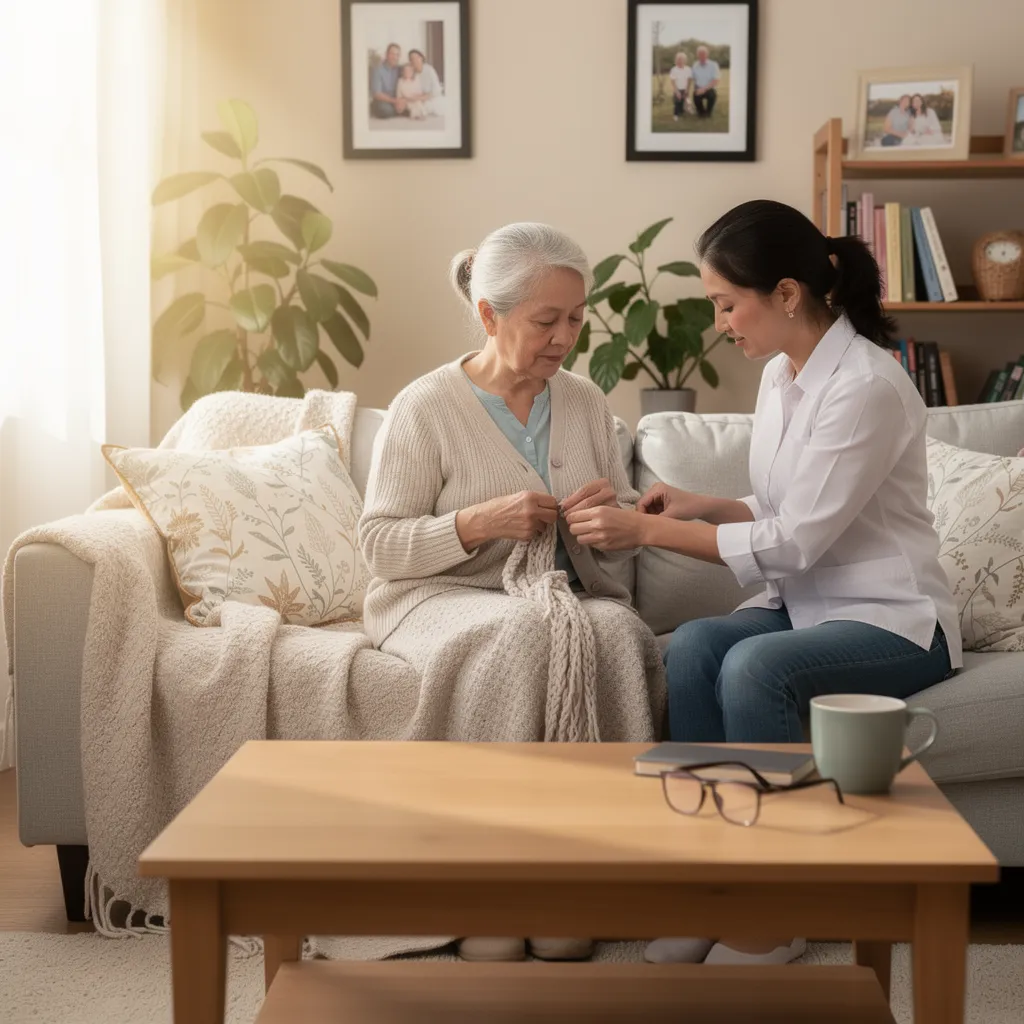
When it comes to How Do I Know if in-Home Companion Care Is the Right Choice for My Loved One?, warning signs include difficulty with daily activities like dressing or cooking, increased isolation, and neglected hygiene. Families noticing these changes should request a free in-home assessment, such as the one 1 Mission Home Care offers. 100% THHS-certified caregivers evaluate needs and design a personalized care plan under registered nurse supervision.
What Daily Struggles Signal It’s Time for Help?
Struggling with basic tasks like dressing, cooking, or bathroom use often signals that an aging family member needs outside support. Difficulty with these routines rarely improves on its own, and delaying help tends to increase the risk of falls, poor nutrition, and isolation. Families weighing in-home companion care as the right choice for a loved one should watch closely for changes in these everyday abilities.
Personal hygiene often provides the clearest warning sign. When bathing, grooming, or wearing clean clothes gets neglected, mobility limitations, low energy, or early cognitive decline are frequently the cause. A senior who once took pride in appearance but now skips these habits deserves a closer look.
What Specific Behaviors Should Families Watch For?
Several patterns tend to appear together rather than in isolation. Families can use the following checklist as a starting point:
- Skipping meals or struggling to prepare food safely
- Wearing the same clothes for multiple days
- Avoiding the shower or bath out of fear of falling
- Needing reminders or assistance to use the bathroom
None of these signs demand panic, but each one warrants a conversation about additional support.
How Does 1 Mission Home Care Respond to These Signs?
Caregivers step in as soon as these struggles emerge, offering hands-on help with dressing, hygiene, and daily routines. Every 1 Mission Home Care caregiver holds 100% THHS certification and works under the supervision of a registered nurse. Personal care happens safely and skillfully. The process starts with a free in-home assessment, allowing a care plan to reflect the specific daily challenges a loved one faces. That approach reflects a simple belief: every senior deserves the kind of compassionate care that feels like family, delivered right at home.
Is Loneliness Affecting Your Loved One’s Well-Being?

Loneliness leaves visible marks on aging adults, often showing up before families realize what’s happening. A parent who once filled the calendar with card games, church groups, or garden club meetings suddenly stops attending altogether. That withdrawal rarely happens without a reason.
A sudden loss of interest in hobbies or social activities deserves attention. This shift can signal loneliness, depression, or emerging cognitive changes, and it often develops gradually enough that families miss the early stages. Social isolation carries its own risks beyond emotional discomfort. Research on aging adults links isolation to mood swings and depression, conditions that compound quickly when left unaddressed.
What Are the Warning Signs of Loneliness in an Aging Parent?
Watch for patterns rather than single incidents. Common indicators include:
- Skipping activities or gatherings once enjoyed regularly
- Irritability or unexplained sadness during conversations
- Declining phone calls or visits from friends
- Spending most days without meaningful interaction
Any one of these signs alone may mean little. Together, they paint a clearer picture of a loved one struggling in silence.
In-home companion care addresses this gap directly. 1 Mission Home Care’s continuum of services, spanning companion care through specialized Alzheimer’s and dementia care, keeps clients engaged rather than isolated. Conversation, shared meals, and everyday companionship become part of the daily rhythm again.
The agency builds more than a service relationship. Clients and caregivers alike experience a supportive, inclusive atmosphere designed to foster genuine connection. Every interaction reflects a commitment to kindness, integrity, and excellence, ensuring loved ones receive respect and dignified care rather than a checklist of tasks completed and forgotten.
Are Home and Money Matters Being Neglected?

Piles of unopened mail and overdue bills often signal that an aging parent needs more help than realized. Home maintenance left undone tells a similar story. Families weighing in-home companion care as the right choice for a loved one should examine these two areas closely before dismissing them as minor lapses.
Financial neglect rarely announces itself loudly. A checkbook that no longer balances, late notices stacking on the counter, or forgotten payments can point to memory trouble, vision changes, or simple overwhelm. Left unaddressed, unpaid bills lead to shut-off utilities, damaged credit, or lapsed insurance — consequences far harder to reverse than the original oversight.
Physical upkeep of the home follows a similar pattern. A lawn once trimmed weekly now grows wild. Gutters clog, leaves pile against the door, and small repairs go unmade for months. These changes often reflect declining strength or mobility rather than carelessness.
What household changes suggest a loved one needs extra support?
Warning signs include stacks of unpaid bills, overdue notices, an unkempt yard, or repairs left unfinished. Any of these changes, especially several appearing together, deserves a closer look and an honest family conversation.
1 Mission Home Care addresses these gaps through a full range of support:
- Personal care assistance for daily routines
- Respite care that relieves family caregivers
- Senior transportation for errands and appointments
- Transitional caregiving after hospital stays
The agency builds a personalized, comprehensive plan around each client’s specific circumstances, delivering compassionate, high-quality support rather than a generic service package. Neglected finances and a neglected yard rarely fix themselves; recognizing the pattern early keeps small problems from becoming crises.
Do Falls or Health Changes Raise Concern?

A fall or hospitalization within the past 12 months signals a genuine safety concern for aging family members. Sudden health changes rarely resolve on their own, and ignoring them raises the risk of a repeat incident. Families weighing in-home companion care as the right choice for a loved one often start with this exact question after a scare in the home.
Physical warning signs tend to cluster together. Frequent falls, trouble navigating stairs, or noticeable balance problems point to a home environment that has become harder to manage safely. These issues rarely appear in isolation — they build gradually, then surface all at once during a visit or a phone call.
What Household Changes Signal a Problem?
A missed dose here or there might mean nothing. A pattern of forgotten medications, paired with an emptier refrigerator or a home that looks less cared for than usual, tells a different story. These shifts often become obvious only when a family member walks through the door after time apart.
What Should Families Watch For?
Several red flags tend to appear together rather than alone:
- A fall or hospital stay in the last year
- Repeated stumbles or unsteadiness on stairs
- Skipped or forgotten medications
- Sparse groceries or a noticeably untidy home
Clinical oversight adds a layer of protection once these signs appear. 1 Mission Home Care structures its caregiving teams under the supervision of registered nurses, giving families a trained set of eyes on health changes that might otherwise go unnoticed. That oversight does not replace a doctor. It does mean safety concerns get flagged and addressed before a small issue becomes a crisis.
Is In-Home Companion Care the Right Choice?
In-home companion care becomes the right choice when an aging family member needs steady support to stay safely at home without giving up independence. Families who wait too long risk rushed decisions, unnecessary hospital stays, or a move to a facility nobody wanted. 1 Mission Home Care was founded on the belief that seniors should remain in their own homes for as long as possible, and that principle shapes every recommendation the agency makes.
Deciding whether care is needed. How Do I Know if in-Home Companion Care Is the Right Choice for My Loved One? — rarely happens in one conversation. It usually starts with a nagging feeling — missed calls, a messier kitchen, a parent who seems more withdrawn than usual.
How does a free in-home assessment help decide?
A free in-home assessment gives families a clear, professional read on what their loved one actually needs, rather than relying on guesswork. 1 Mission Home Care uses this visit to build a care plan matched to the individual. To pair the family with a caregiver suited to that specific situation.
What makes a home care agency trustworthy?
Trustworthiness comes down to accountability and consistency. Families can weigh a provider against a few key markers:
- Local ownership — a locally owned and operated agency answers directly to the families it serves, not a distant corporate office.
- Community investment — genuine dedication to excellence and empathy shows up in strong local relationships and ongoing caregiver training.
- A family-first philosophy — an approach built around letting one family help another, available around the clock.
Choosing companion care is rarely a single decision. It’s a series of small, honest observations that, together, point toward one answer: extra support, delivered with care, keeps a loved one home longer.
Frequently Asked Questions
What are the earliest signs that a loved one needs in-home companion care?
Early signs include difficulty with daily tasks like dressing, bathing, or cooking, skipped meals, neglected hygiene, unpaid bills piling up, and a noticeable withdrawal from hobbies or social activities. These changes often appear gradually, so it helps to watch for several signs together rather than dismissing any single one.
How is loneliness different from normal aging, and why does it matter?
Occasional quiet days are normal, but a consistent loss of interest in activities once enjoyed, declining calls or visits from friends, and unexplained irritability or sadness point to isolation rather than simple aging. Left unaddressed, that isolation is linked to mood swings and depression, which makes early companionship and support important.
What does a free in-home assessment from 1 Mission Home Care involve?
A THHS-certified caregiver visits the home to evaluate daily living needs, safety concerns, and overall well-being under registered nurse supervision. That evaluation becomes the foundation for a personalized care plan matched to the family’s specific situation, with no obligation to commit.
When should families consider companion care instead of waiting?
Waiting too long often leads to rushed decisions, avoidable hospital visits, or a move to a facility nobody wanted. If a loved one shows signs like a recent fall, forgotten medications, neglected finances, or a messier home, that is the right time to schedule a free assessment rather than wait for a crisis.
What makes 1 Mission Home Care different from other home care agencies?
1 Mission Home Care is locally owned and operated in McKinney, TX, with caregivers who are 100% THHS-certified and supervised by registered nurses. The agency’s family-first philosophy focuses on letting one family help another, delivering compassionate, personalized care that feels like family rather than a checklist of tasks.
Conclusion
In closing, recognizing the signs that your loved one needs companion care is an important step toward ensuring their continued independence and quality of life at home. If you’ve noticed any of these indicators, 1 Mission Home Care stands ready to help with a personalized care plan developed through a free in-home assessment. Our THHS certified caregivers, supervised by registered nurses, deliver compassionate support rooted in family values and respect. We’re committed to helping your loved one thrive in the comfort of home.




 Copyright © All rights reserved