When it comes to In-Home Care Options for Seniors, choosing in-home senior care requires assessing daily living needs, medical requirements, and budget—Gen
Selection requires an 8-step process: assess medical needs first—skilled nursing, medication management, or physical therapy—then verify agency credentials and match services accordingly. Choosing correctly supports aging in place, preserving comfort, safety, and independence within familiar surroundings.
Choosing the right in-home care service starts with assessing medical needs, from medication management to specialized memory care, then verifying caregiver credentials. 1 Mission Home Care employs a notable share THHS-certified caregivers supervised by registered nurses, offering a free in-home assessment that matches families with services ranging from companion care to Alzheimer’s and dementia support. cite-1
What Are the Main In-Home Care Options for Seniors?
In-home care options for seniors span a wide range, from simple companionship to advanced memory support. Families searching for the right fit often feel stuck, and that reaction makes sense. So many paths exist that sorting through them alone can feel overwhelming, especially while juggling work and family life.
The good news: these options generally sit along a single continuum rather than as disconnected services. A senior might start with light companion care and later transition into more hands-on personal assistance or specialized Alzheimer’s. Dementia support, all without switching agencies.
What does a full continuum of care actually include?
A full continuum covers everything from friendly companionship and help with errands to skilled support for memory-related conditions. This range matters because needs rarely stay the same for years at a time. A parent who needs occasional check-ins today may require daily hands-on care within a year or two.
- Companion care: conversation, light supervision, help with daily routines
- Personal care: bathing, dressing, mobility assistance
- Specialized Alzheimer’s and dementia care: structured support for memory loss and cognitive decline
- Respite and transitional care: short-term relief for family caregivers or recovery support after a hospital stay
Does every senior get the same care plan?
No senior receives a one-size-fits-all package. Care plans are personalized and built around one-on-one attention rather than a generic template. cite-1 A daughter arranging care for her father, for instance, works from an assessment of his specific routines, mobility, and medical concerns.
Qualifications matter just as much as the plan itself. Caregivers delivering these services hold a notable share THHS certification, giving families a consistent standard to expect regardless of which option they choose. That certification, paired with a tailored plan, gives families a clearer, less overwhelming starting point.

How Do You Know Which Care Type Fits?
Medical needs determine the answer more than personal preference does. A family evaluating in-home care options for seniors should start by identifying specific health requirements, such as medication management, physical therapy, or wound care, before comparing agencies. Skipping this step often leads to a mismatch between the caregiver’s skill set and the senior’s actual condition.
A free in-home assessment removes much of the guesswork. Rather than asking a family to diagnose needs on their own, the assessment identifies the specific requirements of the parent or relative in question, in their own home, under real conditions. That evaluation becomes the foundation for everything that follows.
What happens after the assessment?
The assessment results in a care plan built around the individual, not a generic package. Caregiver matching is part of the process, pairing the senior with someone whose skills and personality suit the household. This step matters because compatibility affects whether care actually gets accepted day to day.
Why does fit matter more than convenience?
Fit determines whether a senior can remain at home long-term, which is the underlying goal of nearly every in-home care decision. The purpose behind personalized planning is straightforward: helping seniors stay in familiar surroundings for as long as safely possible. A plan that ignores medical specifics or personality fit tends to break down, forcing families back into the search process.
Three checkpoints help narrow the decision:
- Medical requirements first — nursing needs, therapy, medication schedules
- Personal compatibility second — caregiver temperament and communication style
- Long-term goal last — sustaining independence at home rather than a temporary fix
Working through these in order keeps the decision grounded in the senior’s actual needs.

What Should You Look for in an Agency?
Strong home care agencies pair clinical oversight with genuine warmth. Registered nurses should supervise every caregiver on staff, giving families a built-in layer of medical accountability rather than a caregiver working in isolation. Families comparing in-home care options for seniors need proof of this structure before signing any agreement, not just a verbal promise.
What qualifications should caregivers have?
Caregivers handling medical tasks need more than good intentions. Agencies serving clients with medication management, wound care, or other clinical needs should employ licensed healthcare providers, such as registered nurses or licensed practical nurses. Ask directly whether nursing staff hold licenses and whether they oversee day-to-day caregiving, not just intake paperwork.
Why does compassionate care matter?
Skilled care alone doesn’t guarantee a good fit. Families consistently say the best providers deliver care that feels like it comes from family, not a transaction. Compassion shapes daily interactions: patience during meals, gentle reminders, real conversation. A technically qualified caregiver who lacks warmth often falls short of what an aging parent actually needs.
Before choosing a provider, families typically weigh a consistent set of factors:
- Caregiver qualifications — licensing, training, and nursing supervision
- Compatibility — whether the caregiver’s personality and approach suit the client
- Patient safety — protocols for emergencies, falls, and medication errors
- Cost transparency — clear pricing without hidden fees
These four concerns surface again and again among adult children vetting agencies for a parent. Skipping any one of them raises the risk of mismatched care, safety gaps, or unexpected expenses down the road. Agencies that welcome direct questions about nursing supervision, staff credentials, and daily care philosophy tend to be the ones worth trusting with a loved one’s home and health.

How Does the Care Plan Process Work?
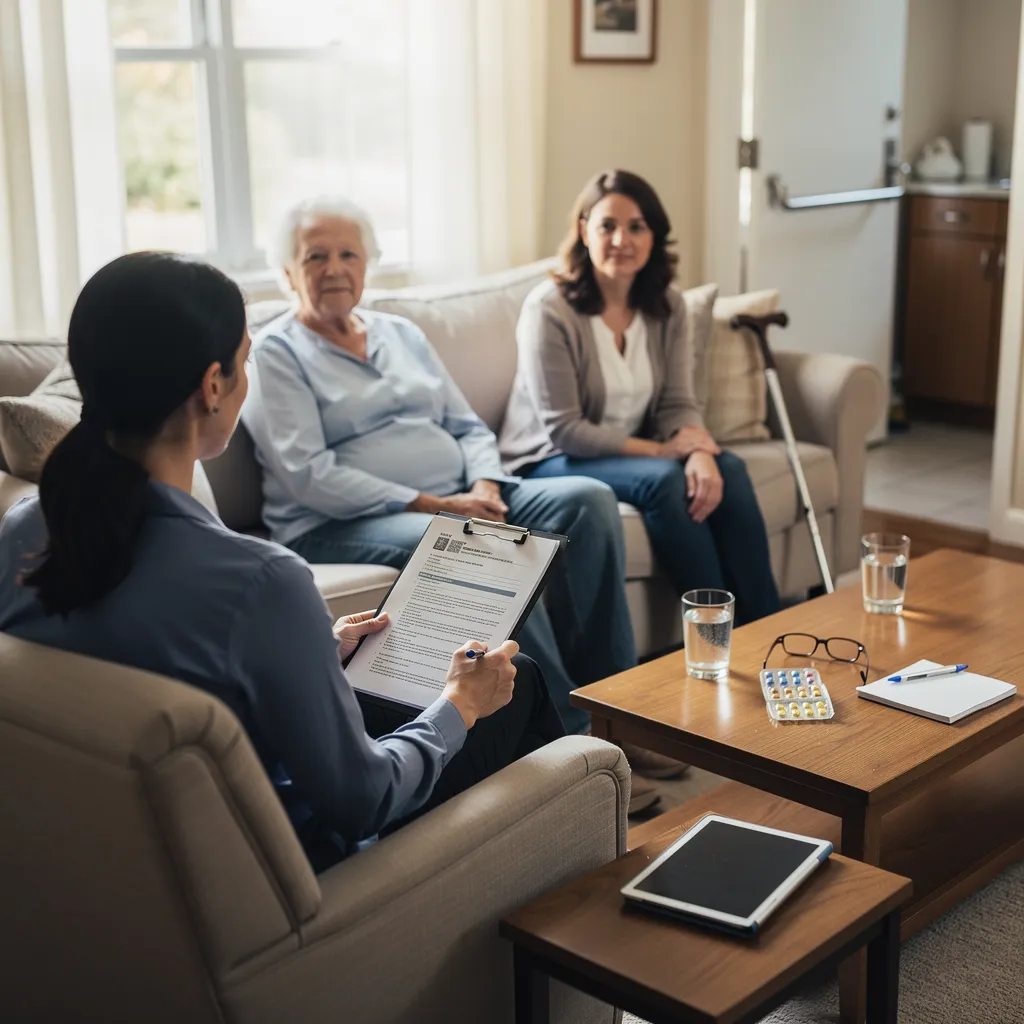
A personalized care plan begins with a free in-home assessment designed to pinpoint the specific needs of an aging parent or relative. cite-1 A registered nurse or trained assessor visits the home directly, observing daily routines, mobility, medication habits, and safety concerns firsthand. Nothing gets guessed at; the plan grows from real observation rather than assumption.
From there, the agency builds a care plan tailored to that individual, then pairs the family with a caregiver suited to those specific needs. This matching step matters. A loved one managing early memory loss requires a different skill set than one recovering from surgery. The right pairing makes daily support feel natural rather than forced.
What should families know before the assessment happens?
Before contacting an agency, families benefit from having a clear picture of what their loved one actually needs day to day. Consider these questions in advance:
- Does the parent need help with bathing, dressing, or meal prep?
- Are there memory concerns, mobility issues, or medication schedules to manage?
- Is support needed a few hours a week, or daily?
Clear answers speed up the assessment and lead to a sharper, more accurate care plan.
Is care shared among multiple clients?
No. Care is delivered one-on-one, meaning a caregiver’s attention stays focused on a single client rather than split across several households in a shift. This one-on-one structure supports in-home care options for seniors that prioritize consistency, trust, and a caregiver who truly knows the person they’re supporting.
Why Does Aging in Place Matter So Much?
Familiar surroundings do more than provide comfort — they support real emotional and physical health as people grow older. This concept, known as aging in place, ranks among the most important considerations for families weighing in-home care options for seniors. A parent who stays in a well-known home environment often experiences less anxiety. Greater stability than one who relocates to an unfamiliar facility.
The right kind of support makes that stability possible. With proper in-home help, seniors maintain daily routines, preserve independence, and build a stronger sense of security. Small things — a familiar kitchen, a favorite chair, a regular walking route. Carry outsized emotional weight for older adults.
Why was 1 Mission Home Care founded?
1 Mission Home Care exists for one clear reason: to help every senior remain at home for as long as possible. That founding purpose shapes every care plan the agency builds, rather than treating home care as a generic service.
Does home care feel more like family than a clinical service?
Care at 1 Mission Home Care extends beyond clinical tasks. The agency holds a firm belief that seniors deserve compassionate support rooted in family values, not a purely transactional caregiver relationship.
Families researching options should weigh a few core priorities:
- Preserving independence and daily routines
- Reducing stress tied to unfamiliar environments
- Building trust through consistent, relationship-based caregiving
Aging in place, backed by compassionate support, keeps seniors rooted in the life they already know.
Frequently Asked Questions
What is the difference between companion care and personal care?
Companion care focuses on conversation, light supervision, and help with daily routines, while personal care involves more hands-on assistance such as bathing, dressing, and mobility support. Many seniors start with companion care and transition into personal care as their needs increase.
How do I know which type of in-home care my parent needs?
The clearest way to find out is a free in-home assessment, where a registered nurse or trained assessor evaluates medical needs, mobility, medication habits, and daily routines in the home. That evaluation becomes the foundation for a personalized care plan rather than a guess.
Are caregivers supervised by medical professionals?
Yes. Caregivers should be supervised by registered nurses, giving families a built-in layer of clinical oversight. Agencies handling medication management or wound care should also employ licensed healthcare providers, such as registered nurses or licensed practical nurses.
Is in-home care one-on-one or shared among multiple clients?
Care is delivered one-on-one, meaning a caregiver’s attention stays focused on a single client rather than being split across several households in a shift. This supports consistency, trust, and a caregiver who truly knows the person they’re caring for.
Why is aging in place important for seniors?
Staying in familiar surroundings supports real emotional and physical health as people age. Seniors who remain at home often experience less anxiety and greater stability than those who relocate to an unfamiliar facility, which is why aging in place is a central goal of in-home care.
Conclusion
Choosing the right in-home care services requires thoughtful consideration of your loved one’s unique needs, values, and preferences. By evaluating care options through the lens of quality, compassion, and personalized support, you empower seniors to maintain their independence and dignity at home. The right care partner becomes an extension of your family, committed to enhancing quality of life while respecting the choices that matter most. Your journey toward trusted, compassionate care begins with honest assessment and open dialog about what home truly means.



 Copyright © All rights reserved