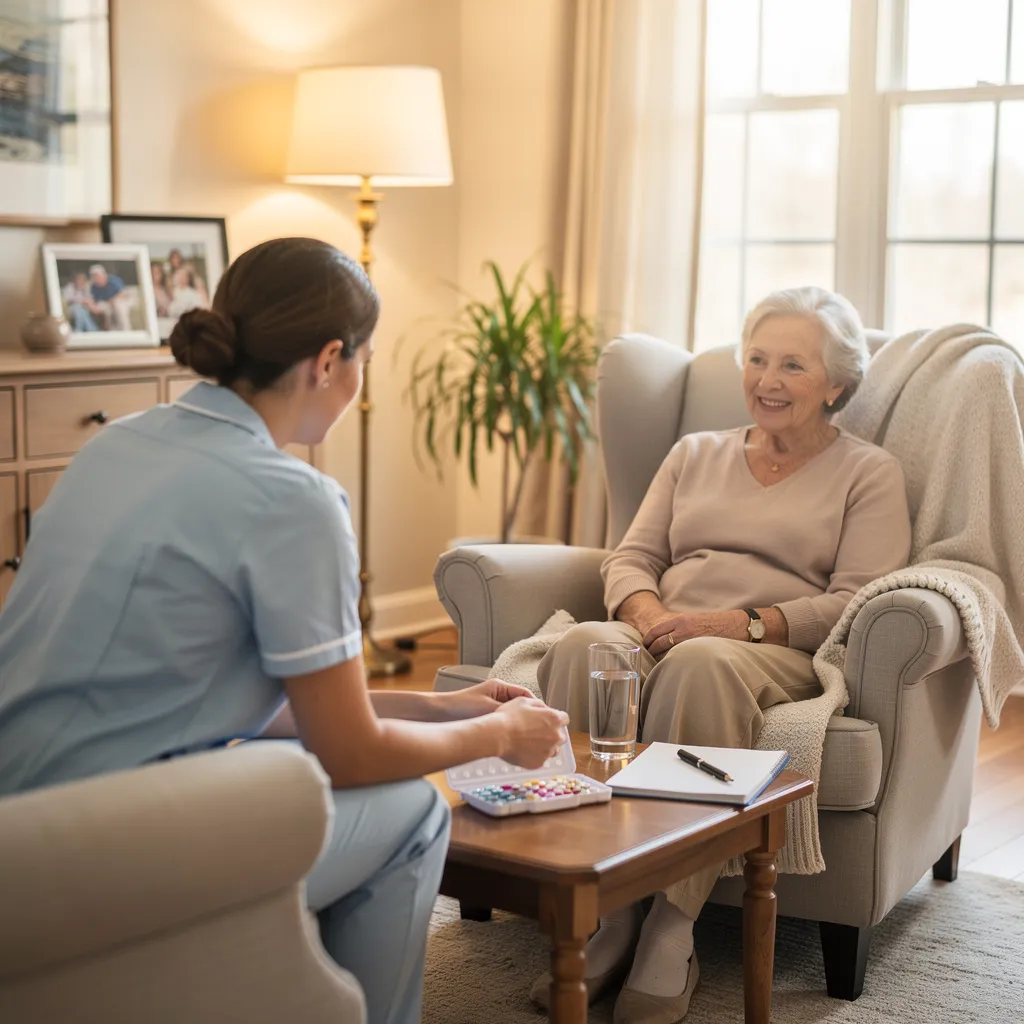
When it comes to What Qualifications and Training Do Your Caregivers Have for in-Home Senior Care?, qualifications for in-home senior caregivers include state-recognized certification, hands-on training, and nursing oversight. 1 Mission Home Care employs a notable share THHS certified caregivers, with training spanning companion care through specialized Alzheimer’s and dementia care. cite-1 Registered nurses supervise every caregiver, ensuring families receive consistent, accountable, and safety-focused care throughout each personalized plan.
What Makes a Caregiver Truly Qualified?
Qualification starts with certification, not just experience. Every caregiver at 1 Mission Home Care holds a notable share THHS certification before ever stepping into a client’s home, meeting the standards set by Texas Health and Human Services. That credential forms the baseline, but families researching caregiver qualifications and training for in-home senior care deserve to know what happens after certification, too.
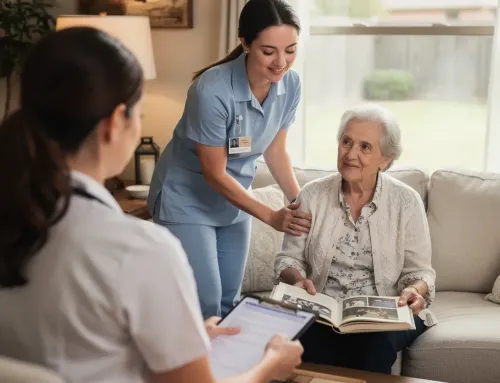
Clinical oversight closes that gap. Registered nurses supervise every caregiver’s work, adding a layer of medical judgment that catches problems before they escalate. This structure means families never rely on a single caregiver’s instincts alone. A nurse reviews the plan of care behind the scenes.
Does the agency assess needs before assigning a caregiver?
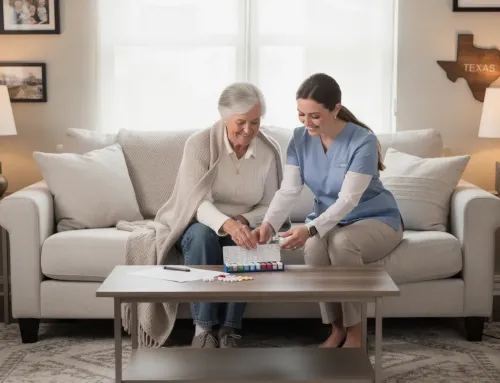
Yes. Care planning begins with a free in-home assessment, conducted before any caregiver is matched to the family. This step identifies specific needs — mobility limits, memory concerns, medication schedules. So the assigned caregiver arrives prepared rather than guessing.
Is training the only thing that matters?
Not entirely. Certification and nursing oversight build competence, but 1 Mission Home Care treats compassion as an equal requirement. The agency holds that every senior deserves care resembling what family would give, not a transactional service exchange.
Three pillars define a truly qualified caregiver:
- Certification verified through THHS standards
- Nurse-led supervision for clinical accountability
- Family-style compassion, assessed alongside technical skill
Together, these elements separate a credentialed caregiver from a genuinely trustworthy one.
What Certifications Do In-Home Caregivers Need?
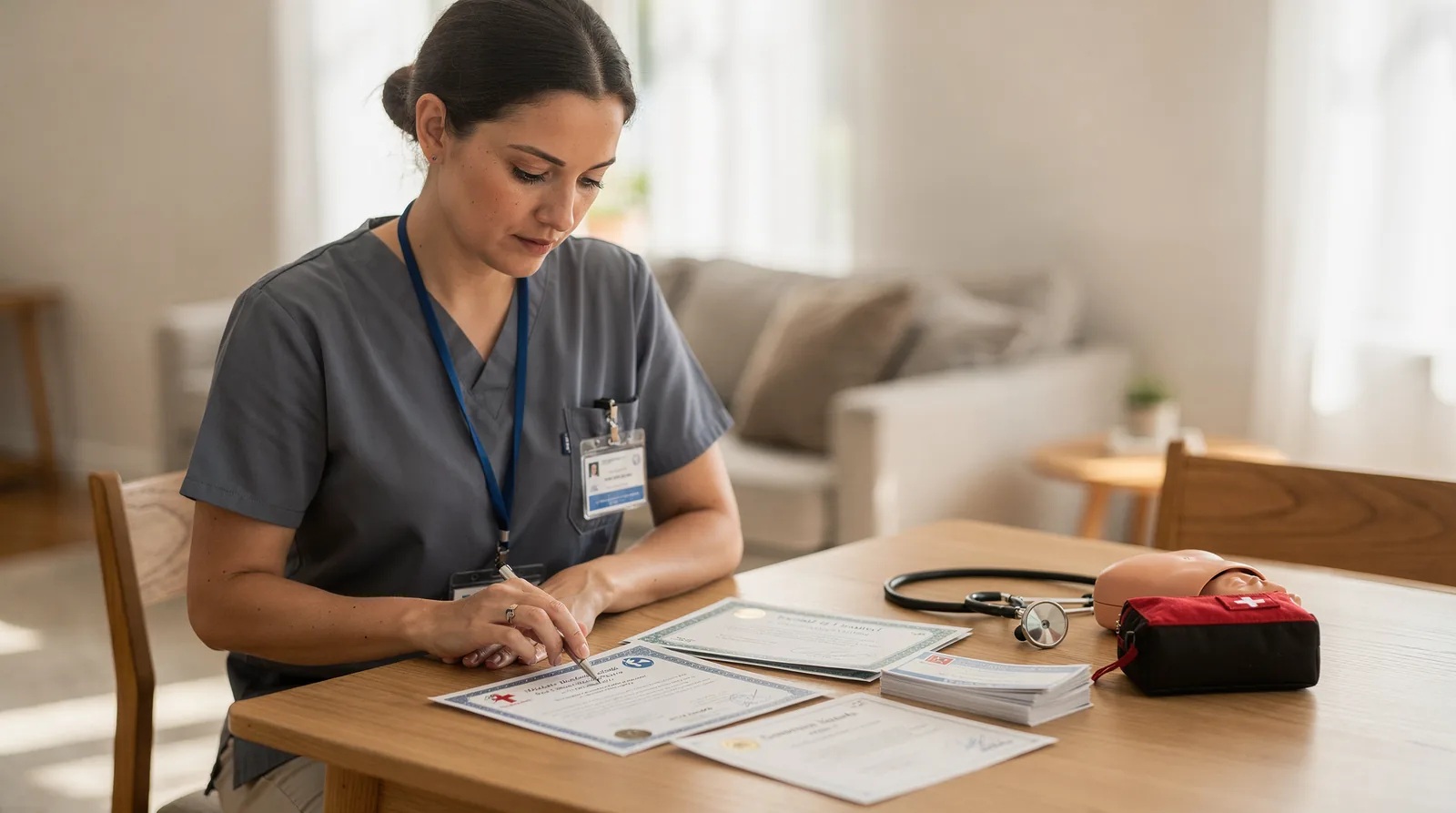
In-home caregivers need a documented combination of state licensing, competency testing, and hands-on training hours before they ever step into a client’s home. Families researching qualifications and training for in-home senior care should treat certification as a non-negotiable checkpoint, not a formality. Agencies that skip this step put frail, vulnerable seniors at risk of inconsistent or unsafe care.
1 Mission Home Care requires a notable share THHS certification for every caregiver on staff. This standard aligns with Texas’s professional certification expectations for anyone providing in-home senior care, giving families a clear benchmark to verify before signing a care agreement.
What training does a Home Health Aide complete?
A Home Health Aide (HHA) typically holds a high school diploma or GED as a baseline qualification. Beyond that, HHAs must pass a competency exam and obtain a state license. Training hours range from 75 to 180, depending on the state’s specific requirements.
How is a Certified Nursing Assistant different from an HHA?
A Certified Nursing Assistant (CNA) follows a similar educational path, starting with a high school diploma or GED. The certification route diverges here: CNAs sit for a state exam and must appear on an official state registry. Like HHAs, CNA training also runs between 75 and 180 hours, varying by state.
| Credential | Base Education | Certification Path | Training Hours |
|---|---|---|---|
| Home Health Aide | High school diploma/GED | Competency exam + state license | 75–180 (state-dependent) |
| Certified Nursing Assistant | High school diploma/GED | State exam + registry listing | 75–180 (state-dependent) |
Families comparing agencies should ask directly, “What Qualifications and Training Do Your Caregivers Have for in-Home Senior Care?” to learn which of these credentials each caregiver holds. A provider unwilling to share licensing details deserves a second look before any care plan moves forward.
How Does Texas Regulate Caregiver Training Hours?
Texas sets clear training thresholds for certain caregiving roles, while leaving others to agency discretion. Home Health Aides, or HHAs, must complete 120 hours of initial training before serving any client. That threshold exists to confirm a caregiver can handle personal care, mobility assistance, and basic health monitoring safely from day one.
Certified Nursing Assistants, or CNAs, face the same 120-hour requirement. Families comparing agencies should treat this figure as a baseline, not a ceiling — reputable providers often build additional instruction on top of it.
Other roles work differently. Home Care Attendants, Personal Assistance Service Workers, and Direct Care Workers don’t fall under a single statewide hour count. Instead, the agency’s administrator decides how much training each of these positions requires. This distinction matters for families vetting providers. Training depth for these roles can vary from one agency to the next.
| Caregiver Role | Training Requirement |
|---|---|
| Home Health Aide (HHA) | 120 hours, state-mandated |
| Certified Nursing Assistant (CNA) | 120 hours, state-mandated |
| Home Care Attendant | Set by agency administrator |
| Personal Assistance Service Worker | Set by agency administrator |
| Direct Care Worker | Set by agency administrator |
Why does training vary by caregiver role?
Texas structures its regulations around the complexity of each job. HHAs and CNAs often perform hands-on medical-adjacent tasks, so the state mandates a fixed 120-hour floor. Roles centered more on companionship or daily living support carry lighter, agency-set requirements instead.
Does more training hours mean safer care?
Not automatically — but it signals accountability. Families reviewing an agency should ask how administrators set hours for non-mandated roles. That answer reveals how seriously a provider treats caregiver readiness beyond the state minimum.
What Specialized Training Supports Memory Care?
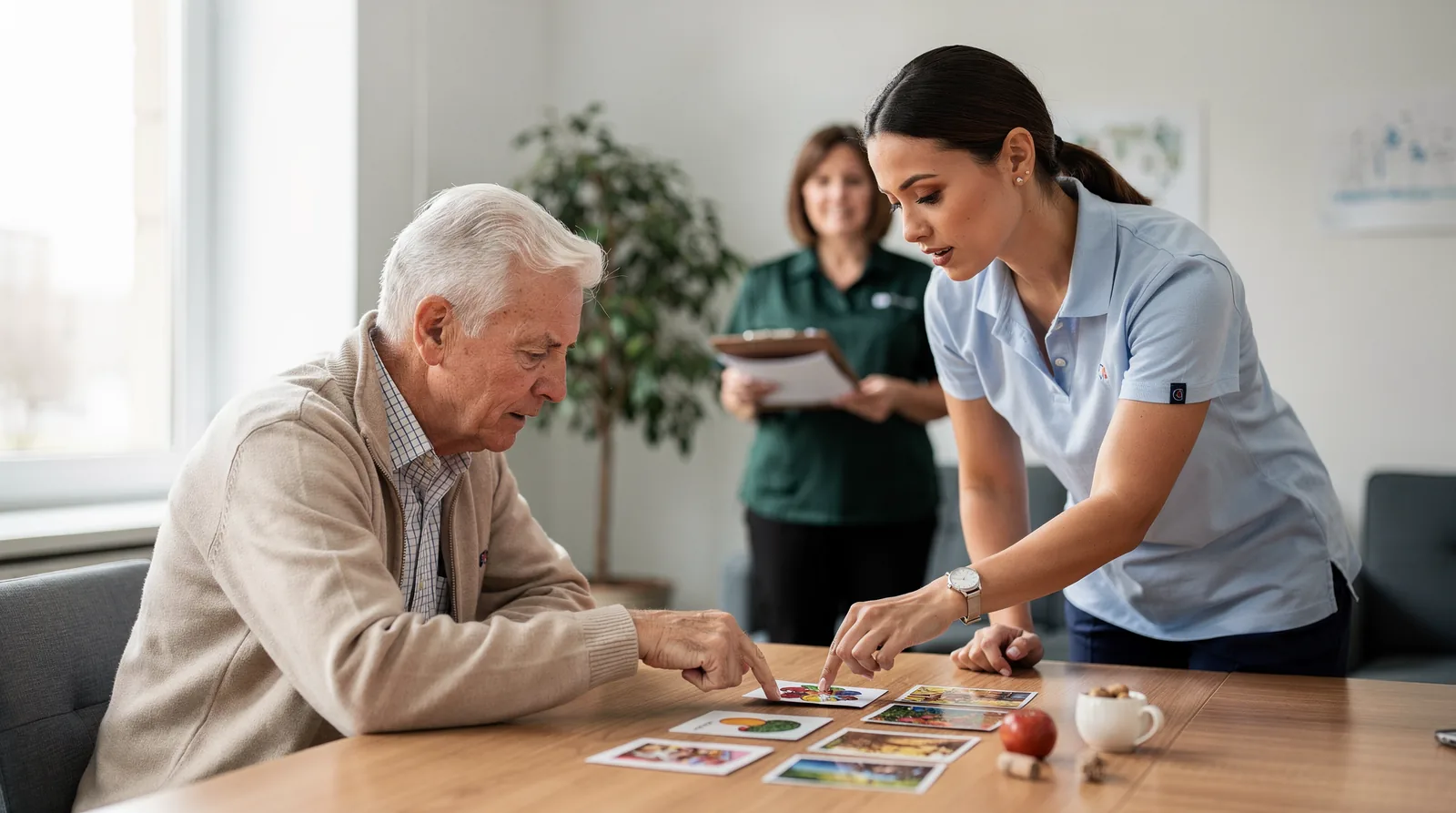
Memory care demands more than basic caregiving skills. 1 Mission Home Care builds its program around a full continuum of care that stretches from simple companion support to specialized Alzheimer’s and dementia care. Families never have to switch providers as a loved one’s condition changes. cite-1
That continuum only works with proper oversight. Registered nurses supervise every caregiver assigned to complex conditions, creating a layer of clinical accountability that families can lean on when memory-related symptoms grow unpredictable. This structure means a caregiver isn’t working in isolation — decisions about daily care connect back to nursing judgment.
Training doesn’t stop at hiring. The agency treats caregiver qualifications and training as an ongoing commitment rather than a one-time checkbox, keeping skills current as a client’s cognitive needs shift over months or years. A caregiver certified last year may need updated techniques this year, and continuous training closes that gap.
Do caregivers need extra certification for dementia patients?
Yes. Beyond standard licensing, caregivers can pursue dedicated memory care training built specifically for clients facing cognitive decline. This specialized instruction addresses behaviors and communication challenges that general caregiving courses don’t fully cover.
What does memory care training actually change day-to-day?
Families notice the difference in small moments. How a caregiver redirects confusion, manages a wandering risk, or communicates with patience during agitation. Below is a quick look at how the pieces fit together:
| Element | Role in Memory Care |
|---|---|
| Full continuum of care | Keeps clients with the same provider as needs progress |
| RN supervision | Adds clinical oversight for complex symptoms |
| Continuous training | Updates skills as conditions evolve |
| Memory care certification | Targets dementia-specific behaviors |
Families comparing agencies should ask directly how each layer works together, not just whether a caregiver holds a certificate.
How Can Families Verify Caregiver Qualifications?
Verification starts before a caregiver ever walks through the door. Families can request a free in-home assessment, a no-cost visit designed to match caregiver qualifications against a loved one’s actual daily needs. cite-1 This step turns vague reassurances into a concrete conversation about training, experience, and fit.
What should families ask during the free in-home assessment?
The assessment exists to build something specific: a care plan and caregiver match tailored to one person, not a generic package pulled off a shelf. cite-1 Families should ask how the plan reflects mobility limits, memory changes, medication needs, or personality preferences. A strong answer will reference the individual by name and situation, not a standard checklist.
Does local ownership matter for accountability?
Local ownership matters because it shortens the distance between a family’s concerns and the people who can act on them. 1 Mission Home Care operates as a locally owned and operated agency, which families can weigh when judging how quickly issues get addressed and how reachable leadership actually is. cite-1 National call centers rarely offer that same accountability.
Families verifying credentials should also ask directly:
- Is every caregiver a notable share THHS certified?
- Does the care plan come from the in-home assessment, not a template?
- Who locally oversees caregiver performance and complaints?
Asking about full THHS certification gives families a clear, verifiable baseline. Vague answers to that question deserve follow-up.
At 1 Mission Home Care, our commitment to excellence begins with our caregivers. Every member of our team holds THHS certification. Operates under the supervision of registered nurses, ensuring that your loved one receives care grounded in professional training and compassionate expertise. This dedication to continuous education and accountability reflects our core mission: enabling seniors to maintain their independence and quality of life within the comfort of home.
Frequently Asked Questions
Are 1 Mission Home Care caregivers certified?
Yes. A notable share of 1 Mission Home Care caregivers hold THHS (Texas Health and Human Services) certification before they are ever matched with a family, and registered nurses supervise every caregiver’s work for added clinical accountability.
What is the difference between a Home Health Aide and a Certified Nursing Assistant?
Both a Home Health Aide (HHA) and a Certified Nursing Assistant (CNA) start with a high school diploma or GED and complete 75-180 hours of training, depending on the state. The key difference is the certification path: HHAs pass a competency exam and obtain a state license, while CNAs sit for a state exam and must appear on an official state registry.
How many training hours does Texas require for caregivers?
Texas requires Home Health Aides and Certified Nursing Assistants to complete 120 hours of initial training before serving any client. Other roles, such as Home Care Attendants and Personal Assistance Service Workers, have training hours set by each agency’s administrator rather than a statewide minimum.
Do caregivers receive special training for dementia or memory care?
Yes. Beyond standard licensing, caregivers can pursue dedicated memory care training focused on dementia-specific behaviors and communication challenges. 1 Mission Home Care also provides registered nurse supervision and a full continuum of care so families don’t need to switch providers as needs change.
How can families verify a caregiver’s qualifications before hiring?
Families can request a free in-home assessment, which matches caregiver qualifications against a loved one’s actual needs before any caregiver is assigned. During this visit, families should ask about THHS certification, nursing oversight, and how the care plan reflects the individual’s specific situation.
Conclusion
Choosing an in-home caregiver comes down to verifiable qualifications, not just reassurances. Certification, nursing oversight, and structured training hours give families a real benchmark to evaluate, while specialized memory care instruction ensures a loved one’s care can evolve without switching providers. At 1 Mission Home Care, that standard starts with THHS-certified caregivers working under registered nurse supervision, backed by a free in-home assessment that matches each caregiver to a family’s actual needs. Families who ask direct questions about certification, oversight, and local accountability are better equipped to choose a provider they can trust.


 Copyright © All rights reserved